
 Ваша собака бунтует?
Вы согласны? Собака на всю жизнь, а не только на Рождество – QQPETS
Вопросы сердечного червя
Почему моя собака ненавидит скейтборды?
4 вещи, без которых владельцы собак-новичков никогда не должны обходиться
Почему некоторые собаки всегда выпрашивают еду
Обновления COVID-19 от 01.04.2020
Ваша собака бунтует?
Вы согласны? Собака на всю жизнь, а не только на Рождество – QQPETS
Вопросы сердечного червя
Почему моя собака ненавидит скейтборды?
4 вещи, без которых владельцы собак-новичков никогда не должны обходиться
Почему некоторые собаки всегда выпрашивают еду
Обновления COVID-19 от 01.04.2020
Этот пост может содержать партнерские ссылки. Мы можем зарабатывать деньги или продавать продукцию компаний, упомянутых в этом посте.
 © Depositphotos.com / jeanro
 Я думаю, вы согласитесь со мной, когда я скажу:
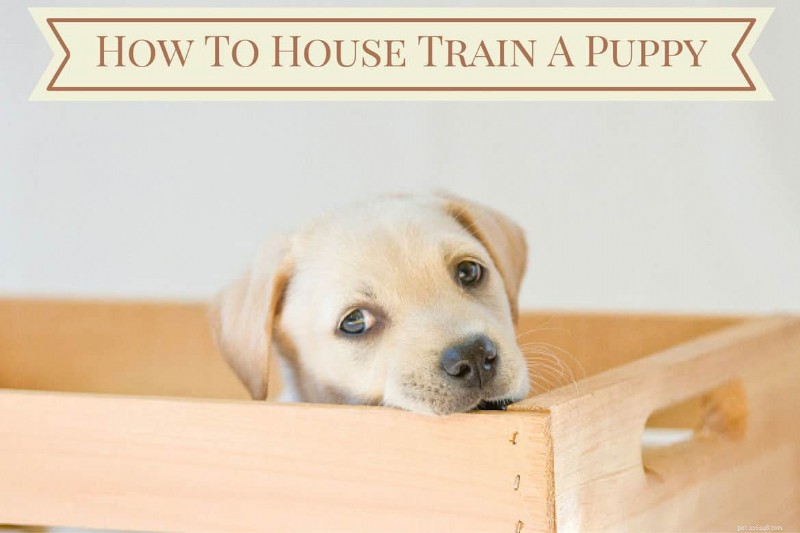
Одна из первых и самых важных вещей, которые вам, как новому владельцу, необходимо усвоить, — это как приучать щенка к дому… и быстро!
Что ж, оказывается, вы можете значительно сократить время, необходимое для приучения щенка к дому, и гораздо быстрее пережить дни чистых полов и ковров, вооружившись лишь небольшими знаниями и следуя хорошо продуманному плану.
И в этой статье я даю вам подробный пошаговый метод, следуя которому, вы сможете подготовить ваш щенячий домик в кратчайшие сроки, с наименьшим количеством «несчастных случаев», беспорядка и уборки на этом пути.
Я не обещаю никакой «волшебной таблетки» ' или 'секрет домашнего обучения ‘ через неделю ваш щенячий домик будет обучен. Такого секрета не существует, и время, необходимое для этого, будет отличаться от щенка к щенку и от владельца к владельцу.
Но то, что я предлагаю, — это подробное руководство, написанное на основе бесчисленных часов исследований и моего собственного опыта домашних тренировок, которое научило меня, что работает, а что нет.
Если вы будете следовать этому руководству терпеливо, последовательно и целеустремленно, я могу гарантировать, что вы как можно быстрее и без стресса превратите своего щенка и себя из новичков в мастеров домашнего дрессирования.
БЫСТРЫЙ СОВЕТ: Чтобы уменьшить количество несчастных случаев в вашем доме, необходимо тщательно удалить запах мочи. Мы рекомендуем ферментное чистящее средство, например Puppy In Training Stain &Odor Eliminator.
«Как приучить щенка к дому ' — это 11-я статья в моей серии «Полное руководство по домашнему обучению».
Предыдущие 10 статей содержат массу вспомогательной информации, которая отвечает на многие наиболее распространенные вопросы по домашнему приучению и дает вам знания, необходимые для принятия обоснованных решений относительно метода и стиля приучения к горшку, которому вы будете следовать.
Однако я намеренно создал это «инструкцию». ‘ Руководство максимально полное и автономное, поэтому чтение предыдущих статей не обязательно.
Я повторяю здесь самую важную информацию менее подробно, а затем даю ссылки на эти статьи, если вы хотите более подробное прочтение и более глубокое понимание.
Чтобы использовать это руководство, я рекомендую прочитать его один раз полностью от начала до конца, тогда вы узнаете все, что вам нужно знать для успешного приучения щенка к дому.
Предупреждаю, эта статья длинная. Очень долго. Скорее всего, чтение займет у вас 15 минут. Но то, что вы узнаете, как лучший способ как можно быстрее приучить щенка к дому, окупит вам время, потраченное в сотни раз в первые несколько недель и месяцев с вашим щенком.
Если вы добавите это руководство в закладки, вы сможете использовать его в качестве справочного материала, щелкнув оглавление выше, чтобы перейти непосредственно к любому разделу, если вам нужно освежить память по определенной теме.
Итак, начнём...
БЫСТРАЯ РЕКОМЕНДАЦИЯ: Еще один инструмент, который мы любим для домашнего приучения, — это дверной звонок на горшок для собак Smart Bell. Это требует небольшого обучения:умный колокольчик предупреждает вас, когда вашему щенку пора на горшок, а также отлично подходит для работы с сигналом «Прикосновение».
В возрасте 8 недель щенок не знает ничего лучше, чем сходить в туалет или покакать где угодно, где бы он ни стоял, когда возникает позыв.
Они понятия не имеют, что это следует делать не так или что вы не считаете приемлемым мытье горшков на коврах.
Вам решать, выбрать подходящее место для ванной, приучить щенка пользоваться им и в то же время научить его, что нельзя ходить на горшок где-либо еще в вашем доме.
Для достижения этой цели есть два важных ключа к успеху. 2 ключа, которые являются конечной целью любого метода или техники, с которой вы когда-либо сталкивались:
Большая часть достижения этой цели — просто часто водить щенка в назначенное ему место в туалете.
Так вы получите наибольшее количество возможностей похвалить их за правильные поступки. А поскольку они пусты, вы также уменьшаете их потребность в горшке, когда они находятся в неположенных местах.
Но это не так просто. Вы также должны предотвращать ошибки у себя дома, сочетая изоляцию и сосредоточенный надзор. И приспособьте эту круглосуточную работу к своему текущему образу жизни и распорядку дня.
Сделать это – это одновременно искусство и наука, требующий хорошо продуманного и тщательно спланированного подхода, чтобы дать вашему щенку как можно больше шансов поступить правильно, одновременно ограничивая возможности поступить неправильно.
И это руководство покажет вам, как именно.
Как долго щенок может удерживать мочевой пузырь? Сколько раз в день щенку нужно ходить на горшок? Сколько времени пройдет, прежде чем ваш щенок будет полностью приучен к дому?
Когда владелец дома начинает заниматься домашним обучением, у него возникает много вопросов, и там написано много дезинформации.
Поэтому, чтобы ответить на наиболее часто задаваемые вопросы, я написал следующую статью:Прежде чем начать, необходимо знать факты.
Я рекомендую вам прочитать эту статью, чтобы иметь реалистичные ожидания от своего щенка и себя и знать, чего вы оба можете достичь и в какие сроки.
 © Depositphotos.com / nasirkhan
 Поскольку ваш щенок понятия не имеет, что вы просите его сделать и почему, вы являетесь самой важной частью процесса дрессировки дома.
Вы должны научить их приемлемым привычкам в туалете, и вы должны делать это так, чтобы им было как можно проще понять и как можно без стресса.
То, как вы подходите к делу, окажет настолько сильное влияние на то, насколько гладко все пойдет, что я посвятил этому вопросу целую статью:Образ мышления и подход, которые вы должны использовать при домашнем обучении.
В статье я обсуждаю традиционные методы, которые никогда не следует использовать, почему их не следует использовать и что следует делать вместо них.
Я расскажу о том, как вы должны взять на себя роль наставника и тренера, быть терпеливыми и понимающими, но при этом твердыми и последовательными.
Я рассказываю, как работать с естественными инстинктами вашего щенка, как лучше всего справляться с несчастными случаями в доме и как приучение к туалету закладывает основу ваших будущих отношений.
Это важное чтение для всех, кто собирается приступить к программе домашнего обучения, поэтому я рекомендую вам прочитать его, прежде чем продолжить работу с этим руководством.
Ограничить доступ щенка к вашему дому до тех пор, пока ему нельзя будет доверять, – это один из лучших способов, которые вы можете сделать, чтобы быстрее и чище достичь успеха.
У собак есть инстинкт не покидать свою берлогу, место, где они едят и спят. Ваша задача — убедить щенка, что весь ваш дом — это его логово, и внутри него ничего не должно пачкаться.
Это будет намного проще сделать, если вы сначала ограничите своего щенка одной комнатой в вашем доме, убедите его сначала поддерживать там чистоту, а затем постепенно расширяете области, куда ему разрешено находиться.
Собаки плохо обобщают, поэтому, даже если они знают, что им нельзя ходить на горшок на вашей кухне, они не воспользуются этой идеей и не применят ее в вашей спальне.
Вы должны научить их не ходить на горшок в вашей спальне почти как отдельная идея.
Если вы сразу разрешите доступ ко всему дому, ваш щенок не будет воспринимать его как одно большое место, а как множество отдельных и совершенно разных мест.
Но если вы начнете с малого, ограничите их и приучите к горшку в одной области, а затем постепенно расширяете, вашему щенку будет легче связать новую область со своим жилым пространством, которое он должен содержать в чистоте.
Это ускорит процесс взлома дома и в то же время снизит количество несчастных случаев с вашим щенком и количество генеральных уборок, которые вам придется сделать. Выигрышная ситуация в любом случае!
 © Depositphotos.com / tairen10
 Ниже приведен список предметов и продуктов, которые вам понадобятся, чтобы приучить щенка к туалету.
Некоторые из них необходимы, другие не являются обязательными, а то, что вам нужно, будет зависеть от выбранного вами метода.
Вы сможете определить, что вам нужно, когда прочтете руководство и узнаете свой план действий.
Если вы хотите подробно описать, как и почему эти предметы так полезны, как каждый из них следует использовать и как они помогают во время домашних тренировок, прочтите мою статью:
Товары, расходные материалы и оборудование, необходимые для домашнего обучения
 © Depositphotos.com / belchonock
 То, что вы кормите и как вы кормите своего щенка, оказывает невероятное влияние на этот процесс.
Я написал подробную статью о том, как выбор кормления имеет огромное значение во время домашнего приучения, которую вы можете прочитать нажмите здесь.
В нем подробно обсуждается влияние вашего выбора еды на ваш успех, а также множество советов о том, как кормить щенка.
Конечно, я настоятельно рекомендую вам прочитать его, после чего вы сможете вернуться к информации и пропустить этот раздел для перехода к следующему. Но для тех, у кого мало времени, основные тезисы статьи таковы:
Низкокачественная пища полна дешевых наполнителей, имеет низкую пищевую ценность и ее трудно переваривать, что приводит к ее прохождению через организм.
В то время как высококачественная пища богата питательными веществами, легко переваривается и больше усваивается, то есть меньше проходит через нее.
Таким образом, высококачественная пища приводит к тому, что ваша собака производит меньше стула каждый день, что, очевидно, идеально подходит для домашнего обучения.
Поскольку щенок извлекает больше питательных веществ из высококачественной пищи и через него проходит меньше дешевых наполнителей, его стул становится более твердым, и это помогает ему научиться контролировать кишечник.
Поскольку пища проходит через организм вашего щенка с достаточно постоянной скоростью, если вы кормите их каждый день в одно и то же время, они выработают привычку испражняться в одно и то же время каждый день.
Затем вы сможете составить график, соответствующий этому времени, ваш щенок научится ожидать перерыва в туалет в это время, и вам обоим станет легче приучать к дому.
 © Depositphotos.com / lifeonwhite
 Если вместо того, чтобы придерживаться строгого времени кормления, вы оставите щенку еду на весь день, он может выбирать и есть еду в случайное время.
Это называется «бесплатное кормление» и является худшим, что вы можете сделать, пока ваш щенок не приучит подходящие привычки к туалету.
Если они едят в случайное время, им тоже придется какать в случайное время.
Без регулярного и предсказуемого графика того, когда вашему щенку нужно какать, приучать его к дому будет сложнее.
Поэтому заставляйте щенка есть по расписанию и забирать его миску с едой между приемами пищи, независимо от того, пустая она или нет.
Резкие изменения в рационе очень часто приводят к жидкому стулу или диарее, ваш щенок становится физически неспособен его держать, и это худшее, что может случиться во время дрессировки дома (не говоря уже о всей уборке, которую вам придется делать! )
Выберите одну, высококачественную и питательно сбалансированную марку корма для щенков и придерживайтесь ее. Тот, который использовал заводчик вашего щенка, обычно является лучшим выбором, поэтому вашему щенку не придется меняться.
Если вам все же нужно выбрать корм новой марки или вы думаете о переходе на что-то получше, мы перечислили здесь некоторые из лучших кормов для щенков лабрадора и крупных собак (откроется в новом окне).
Вы должны обеспечить щенку свободный доступ к воде в течение дня, следить за его потреблением, чтобы можно было определить, пьет ли он слишком много или слишком мало, но не ограничивайте доступ, поскольку его потребности могут различаться.
Важно закрыть им доступ к воде за последние 2 часа перед сном, иначе им придется ходить много раз за ночь, чего вы, конечно, не хотите.

Собак привлекает запах собственной мочи, и они снова и снова используют одно и то же место в качестве туалета.
А их обоняние настолько острое, что даже малейшего следа мочи достаточно, чтобы побудить их повторить выступление.
Поэтому после каждого несчастного случая вам необходимо тщательно очистить помещение, удалив все следы мочи и ее запах. Если вы этого не сделаете, очень велика вероятность, что ваш щенок сделает еще одну маленькую лужу.
Это может свести на нет ваши усилия, потому что поощрение их к горшку у вас дома — это полная противоположность тому, чего вы пытаетесь достичь.
Обычные бытовые чистящие средства недостаточно хорошо справляются с устранением запахов, поэтому вам действительно необходимо использовать средство для удаления пятен и запахов, специально разработанное для этой цели.
И вам нужен пошаговый метод, который гарантирует результаты.
Советы по выбору чистящих средств, тех, которых следует избегать, как найти скрытые пятна мочи (с помощью УФ-излучения) и пошаговый процесс быстрой и тщательной очистки можно найти в моей статье:
Случаются несчастные случаи:как удалить пятна и запахи домашних животных.
Прежде чем приступить к приучению к горшку, вам необходимо принять одно очень важное решение:будет ли у вашей собаки место для ванной снаружи, внутри или, возможно, даже и там, и там? И как вам решить?
Мой совет:Выберите место для ванной на открытом воздухе, если у вас нет веских причин поступить иначе.
Приучить собаку к туалету исключительно на улице легче понять вашему щенку, вам легче дрессировать, и она будет мягче для вашего носа.
Но если у вас проблемы с передвижением или вы живете на последнем этаже многоэтажного дома, быстро выбраться на улицу невозможно.
Затем вам придется выбрать место для ванной внутри дома, по крайней мере, до тех пор, пока ваш щенок не научится четко контролировать мочевой пузырь.
Вы можете выбрать сочетание этих двух вариантов:туалет для собаки будет находиться на улице, когда вы там, и внутри, на подушечках или бумаге, когда вас нет.
Это подходит, если вам приходится работать весь день или иногда оставлять собаку одну на много часов.
Хорошей идеей будет «приучить» щенка к туалету внутри помещения, когда он находится в зоне содержания, даже если ваш окончательный план состоит в том, чтобы он всегда пользовался туалетом только на улице.
Это связано с тем, что в зависимости от возраста щенка ему физически невозможно удерживать мочевой пузырь более пары часов, пока он не вырастет.
Лично я всегда замечал, что с каждой собакой, которая у меня когда-либо была, были моменты, когда мне приходилось оставлять их одних на 3, 4, а может быть, и на 5 часов. Я планирую, что этого не произойдет, но иногда это случается.
Вы не можете держать щенка в клетке на такой срок, поэтому у вас должен быть запасной план. И это значит, что их нужно ограничить загоном для упражнений или одной маленькой комнатой с заклеенной обоями зоной, где они могут ходить на горшок.
Поэтому, хотя дома я бдителен и очень активно приучаю щенка к туалету на улице, мне также приходится приучать его к туалету на случай, если меня не будет дома.
Поговорив со многими друзьями и владельцами, я понял, что это распространенная ситуация для многих.
Многие люди позволяют своим собакам использовать весь двор в качестве туалета, лишь бы он находился на улице. Но вы можете научить их каждый раз использовать только одно определенное место.
Если им разрешено ходить куда угодно во дворе, весьма вероятно, что вы не сможете найти и собрать все их экскременты, что нехорошо, если у вас там играют дети или щенки «откладываются» вокруг вашего красивого шезлонга.
Вы также можете обнаружить, что моча вашей собаки вызывает «ожог газона», когда трава становится коричневой на регулярно используемых участках вашего газона.
Более того, если они регулярно ходят рядом с дверью или под окном, это может привести к тому, что по вашему дому начнет распространяться вонь, особенно летом. Но…
Если вы научите их пользоваться только одним местом, ваш двор станет чище и гигиеничнее для всех остальных пользователей, у вас не будет проблем с сожженной азотом травой, и вам будет намного проще поддерживать двор в чистоте.
Поэтому имеет смысл приучить собаку каждый раз использовать одну конкретную область.
Зона вдали от дверей, окон, барбекю или игровых площадок. Но не думайте, что, выбрав место «вдали от дороги», вы сможете уклониться от обязанностей по уборке.
Собаки любят ходить туда, где они чувствуют запах, где они были раньше, но там все равно должно быть чисто. Поэтому, если вы хотите, чтобы они продолжали использовать одно единственное место, вам все равно придется подбирать все, что можно, и регулярно убирать это место.
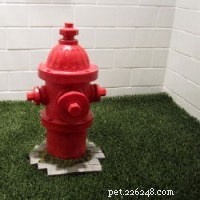
Выбирая место для горшка в помещении, первое, о чем следует помнить, — это то, что вам придется жить с запахом.
Из-за ограниченности пространства это не всегда возможно, но вам следует стараться избегать таких мест, как спальни, места, где играют дети, а также места, где вы готовите или храните еду. Это не оставляет большого выбора!
Идеальное место — любая малоиспользуемая комната:свободная комната, прачечная или малоиспользуемая ванная комната.
Еще одним соображением является поверхность, на которой вы размещаете ванную комнату для собак. Для собак, использующих горшок в помещении, всегда будет риск несчастных случаев и промахов.
Поэтому, если есть возможность, поставьте ванную комнату вашего щенка на пол, выложенный плиткой или линолеумом. Или, если это должно быть место с ковровым покрытием, положите под унитаз пластиковую пленку, чтобы защитить пол и облегчить уборку.
Есть много вариантов использования в качестве горшка в помещении. Ящики для газона, лотки для мусора, некоторые новые даже имеют дренаж, который собирает отходы в резервуары для хранения… список теперь почти бесконечен.
Так что же выбрать?
Лично я всегда приучаю своих собак к горшку на улице и не обеспечиваю им постоянный туалет в помещении.
Поэтому я никогда не рассматривал газонные ящики или туалетные лотки, предпочитая вместо этого использовать бумагу и подушечки для щенков, если мне приходится оставлять их дома одних дольше, чем они могут удерживать свой мочевой пузырь.
Но если вам нужно сделать выбор:Каковы плюсы и минусы каждого из них?
[amazon Fields=”B01MPWFYZA” value=”thumb” image_size=”large” track_id=”labradortraininghq-20″ image_class=”ais200fr”] Подушечки для щенков обладают высокой впитывающей способностью, их можно помещать в лоток с приподнятыми краями, что уменьшает количество пролитой жидкости и делает уборку относительно легкой.
Их часто пропитывают запахом, чтобы привлечь щенка и уничтожить его, чтобы немного ускорить процесс домашнего обучения. Они также смотрятся дома лучше, чем пространство, покрытое бумагой (немного).
Обратной стороной является то, что они не покрывают такую большую площадь, как бумага, и я слышал истории о собаках, которые учатся разрывать их на куски, но я думаю, это верно для большинства вещей!

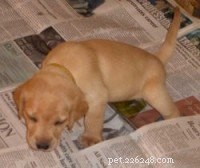
Бумага очень дешевая, а если использовать старые газеты, то почти бесплатно! Таким образом, вы можете охватить большую территорию с очень низкими затратами, пока ваш щенок молод и неопытен.
Однако моча часто стекает с бумаги, прежде чем впитаться, поэтому разливы случаются чаще, а очистка становится сложнее. Кроме того, малышу легче промокнуть бумагу на пол, хотя при желании вы можете использовать поднос, например, с подушечками для щенков.
Наконец, вашему щенку очень легко порвать бумагу и разложить ее там, где подушечка больше удерживается, когда она вставлена в лоток.
[amazon field=”B00G7RMCHO” value=”thumb” image_size=”large” track_id=”labradortraininghq-20″ image_class=”ais200fr”] Лоток для мусора легко чистить:наполнитель с высокой впитывающей способностью впитывает отходы, а высокие стороны лотка хорошо удерживают все содержимое. Это также выглядит лучше, чем разворот газет.
Но основная проблема с наполнителем заключается в том, что некоторые собаки воспринимают его как закуску, его можно выбросить из лотка и растоптать по дому, если он прилипнет к лапам, и не дай бог вам встретится собака, которая попытается закопать свои отходы!
[amazonfields=”B002DCWA4C”value=”thumb” image=”2″ image_size=”large”tracking_id=”labradortraininghq-20″ image_class=”ais200fl”] Ящики для газона доступны с натуральным или синтетическим покрытием.
Они работают хорошо, потому что настолько отличаются от окружающего пола, что щенок легко может отличить их от горшка, ваша собака чувствует мягкую траву под ногами, и они хорошо удерживают все в себе.
Обратной стороной является то, что они являются самыми дорогими из доступных вариантов, и у некоторых собак появляется привычка рыть и жевать газонный ящик, как если бы они делали это с кусочком травы снаружи.
Я рекомендую использовать газеты, когда очень маленький щенок находится в одной комнате с легко моющимся полом.
Как только ваш щенок привыкнет пользоваться бумагой, обрежьте покрытый участок до размера всего пары листов, затем поместите подушечки для щенков в лоток поверх бумаги и предложите щенку использовать их.
Бумага настолько дешева, что вы можете использовать ее в больших количествах с новым щенком, пока он не научится хотя бы наполовину, а затем перейти на подушечки для щенков, чтобы облегчить задачу чистки.
Если вам нужно использовать только горшок в помещении с вашим очень маленьким щенком, пока он не подрастет, научиться контролировать мочевой пузырь, а затем использовать исключительно снаружи, я бы никогда не рассматривал ящик или лоток для газона.
Но если вы собираетесь использовать ванную комнату в помещении в течение длительного времени, возможно, вам стоит рассмотреть возможность установки газонных ящиков, лотков для мусора или даже одного из более современных и креативных домашних туалетов.
Есть некоторые современные туалеты для собак, требующие только еженедельной чистки, некоторые из них устраняют запахи, а многие выглядят лучше, чем бумага или подушечки для щенков, как постоянный атрибут дома, поэтому вы можете изучить некоторые из этих вариантов.
Вы можете выбрать один из четырех широко используемых и рекомендуемых методов, хотя на самом деле вы почти наверняка будете использовать комбинацию из двух или более.
Эти методы:
В оставшейся части этого руководства я буду ссылаться на каждый из этих 4 методов и указывать, когда вам следует или можно их использовать.
Чтобы убедиться, что вы хорошо понимаете, что представляет собой каждый метод и что он включает в себя, я дам краткое описание каждого из них.
Я также дам ссылку на более подробные статьи, которые я написал по каждому методу, для тех, кто хочет получить более подробное представление.
 © Depositphotos.com / Agencyby
 Бумажное обучение — наиболее широко известный и наиболее часто используемый метод домашнего обучения во всем мире.
Вот краткое описание техники:
Описание: Приучение к туалету на бумаге заключается в обучении щенка туалету в помещении на большом участке газет или предварительно обработанных подушках для щенков, которые побуждают щенка использовать это место в качестве ванной.
Привыкнув к использованию бумаги или подушечек, вы медленно разрезаете покрытую область, пока они не будут надежно использовать всего пару листов и никогда не промахнуться.
Затем вы медленно перемещаете бумагу наружу, туда, где находится другой набор, и начинаете поощрять щенка выходить только на улицу, прежде чем полностью удалить бумагу внутри. На этом этапе переход будет завершен.
Главный совет при обучении работе с бумагой:когда вы чистите испачканную бумагу, вам следует оставить один кусок бумаги и положить его в качестве среднего слоя новой бумаги.
Подушечки для щенков имеют запах, привлекающий щенка, а бумага - нет.
Но, оставив при себе кусочек слегка загрязненной бумаги с запахом мочи вашего щенка, вы получите тот же эффект, что и привлечете щенка, чтобы он удалился туда, куда вы хотите.
Эффективность: По шкале от 1 до 5 ставлю 3.
Он не может получить более высокий балл, потому что вы приучаете их пользоваться туалетом внутри, а затем переучиваете этого не делать! Это сбивает с толку и затягивает процесс обучения.
Это также приводит к ошибкам (посадка на горшок внутри), совершаемым гораздо позже в жизни щенка по сравнению с другими методами, особенно когда они видят какую-либо бумагу, оставленную без дела.
Наиболее подходит для: Либо люди, которые собираются иметь место в ванной комнате в долгосрочной перспективе, либо люди, которые не будут использовать клетку для дрессировки, но не могут взять на себя обязательство постоянно присматривать за своим щенком, когда он находится дома.
Но это также хороший запасной план, который каждый может использовать на случай, если ему придется оставить щенка дома одного дольше, чем можно ожидать, чтобы удержать мочевой пузырь.
Простота использования: По шкале от 1 до 5, однозначно 5.
Это очень простой в использовании метод, требующий от вас минимум усилий по сравнению с любым другим методом.
Но это приводит к большему количеству ошибок со стороны вашего щенка на более позднем этапе жизни. Таким образом, поначалу вы можете быть более пассивным и менее вовлеченным, но в дальнейшем в жизни вашего щенка вам придется делать больше уборки по сравнению с другими методами.
Необходимое оборудование: Ничего, кроме стопок старых газет! Очень экономичный метод.
Дополнительная информация: Подробное обсуждение дрессировки щенка или собаки на бумаге, плюсы и минусы, а также некоторые советы экспертов можно найти в следующей статье:Как легко приучить щенка или собаку к бумаге
[amazonfields=”B001DRY8Z2″value=”thumb” image_size=”large”tracking_id=”labradortraininghq-20″ image_class=”ais200fl”] Использование ящика — самый эффективный и простой способ ускорить процесс домашнего обучения.
Описание: В этом методе используется тот факт, что у собак есть природный инстинкт не пачкать места, где они едят и спят.
Ключом к этому является то, чтобы ящик был достаточно большим, чтобы в нем можно было стоять, легко разворачиваться и лежать, вытянувшись, но не больше.
Щенок или собака будут «держать его» так долго, как только смогут, чтобы не облегчиться, а затем им придется лежать в нем.
Огромным преимуществом этого является то, что щенок еще в раннем возрасте учится тому, что только потому, что у него есть позыв к мочеиспусканию или покаканию, ему не нужно этого делать, и он действительно может его сдерживать. При использовании других методов щенок не усвоит этот факт в таком молодом возрасте.
Однако не стоит постоянно держать щенка в клетке, это было бы жестоко.
Вы складываете их только тогда, когда не можете за ними наблюдать, заняты дома или, возможно, ненадолго находитесь вдали от дома. В остальное время вы наблюдаете за ними и регулярно выводите их на горшок, чтобы привить им хорошие привычки.
Эффективность: По шкале от 1 до 5 ставлю 5
Я говорю, что это самый эффективный метод, который я знаю или о котором когда-либо читал. Щенок учится правильному поведению быстрее, чем при использовании любой другой техники, и на этом пути совершается меньше ошибок (и меньше уборки!).
Наиболее подходит для: Все! Я настоятельно рекомендую использовать клетку во время домашнего дрессировки, потому что это очень эффективно.
Простота использования: По шкале от 1 до 5 я бы поставил 3.
Это проще, чем постоянный контроль, и сложнее, чем бумажное обучение. Это связано с тем, что вам придется приучить щенка к клетке, прежде чем вы сможете использовать клетку для домашней дрессировки, что требует времени и усилий.
Нажмите здесь, чтобы просмотреть мое бесплатное и подробное руководство по приучению щенка к клетке.
Необходимое оборудование: Подходящий ящик. У меня есть руководство, которое поможет вам выбрать правильный размер и тип. Его можно прочитать, нажав здесь.
Дополнительная информация: Чтобы прочитать подробное обсуждение использования клетки для домашнего приучения, прочтите:Как использовать клетку для приучения щенка к дому
В этой статье рассказывается, почему этот метод настолько эффективен, как он использует три естественных инстинкта вашего щенка, взвешивается несколько плюсов и минусов и многое другое.
 © Depositphotos.com / Agencyby
 Описание: Это так, как звучит:вы проводите все свое время со своим щенком, постоянно присматривая за ним.
Каждый раз, когда вы замечаете признаки того, что они собираются сходить на горшок, вы подхватываете их и несете в ванную.
Эффективность: По шкале от 1 до 5 я ориентировочно ставлю ему 3.
На самом деле его оценка может быть выше или ниже в зависимости от того, насколько вы преданы делу и насколько успешно присматриваете за своим щенком.
Но я поставил ему 3, потому что как бы хороши ни были ваши намерения, как бы внимательно вы ни относились к задаче присмотра, вы потеряете бдительность, и ваш щенок сможет ускользнуть и совершить ошибку.
По этой причине это не так эффективно, как обучение ящикам, и займет больше времени, что, безусловно, приведет к большему количеству «несчастных случаев» на этом пути.
Наиболее подходит для: Люди, которые против любого рода изоляции и могут оставаться дома и присматривать за своим щенком целый день каждый день. В основном это люди, работающие на дому, и пенсионеры.
Но этот метод также является частью любого плана домашних тренировок, независимо от того, используете ли вы другие методы параллельно или нет. Это потому, что, когда щенок находится на свободе в доме, он ДОЛЖЕН строго контролироваться, чтобы не допустить ошибок.
Простота использования: On a scale of 1 to 5, I give it a 2.
It scores low as it requires a lot of input from you as the owner. You need to concentrate on your puppy at all times, ready to intervene and correct them any time they’re about to potty where they shouldn’t.
It is quite draining never being able to take your eye of your puppy.
Equipment needed: None. Ничего. Not a crate, newspapers, puppy pads or anything. The cheapest of all the methods…unless you put a price on your time.
Further Info: For more information on the constant supervision technique, please read the following article:House Training WITHOUT A Crate:Constant Supervision
 © Depositphotos.com / andresr
 This is a little used technique, and at first may sound a little silly. But it is highly effective.
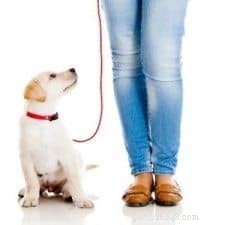
Description: This technique calls for you to tether your puppy to you by leash and have them follow you wherever you go when inside your home.
This way they’re never more than a few feet away and have no chance to sneak off unnoticed to potty where they shouldn’t.
You will notice and be able to intervene and correct every possible mistake, taking them outside every time they need to relieve themselves.
Effectiveness: On a scale of 1 to 5, I’d say it’s a 5.
Used correctly, the opportunity for your puppy to make mistakes is completely removed so every single time they need to visit their bathroom spot is a training opportunity you will take advantage of and no mistake goes uncorrected.
Best suited to: People who spend all their time at home with their puppy and would also enjoy literally being tied to their pup all day.
It’s also a good method to throw into the mix for people who’ve found difficulty with ‘constant supervision’ and allow their puppy to sneak off and have accidents in the home, helping them to get better results.
Ease of use: On a scale of 1 to 5, I’d say a 4.
It’s easier than constant supervision as your puppy is attached so you can relax a little in comparison.
It’s easier than using a crate because you don’t have to crate train your puppy. But it’s not as easy as paper training which is very hands off for an owner.
Equipment needed: A quick release collar and a house line / leash.
Further Info: for a detailed discussion of this technique, the benefits, downside, and many more tips, please see my article:Umbilical Cord House Training:What is It? How Does It Work?
I use and recommend a mixture of crate training, constant supervision and paper training.
I primarily use crate training as I firmly believe it’s the most effective method and I’m also a strong believer in the idea that every dog deserves to be crate trained to enjoy the continuous benefits it offers throughout their life.
I use constant supervision extensively because when a puppy is outside of the crate you have to watch them diligently to avoid puppy mistakes.
I use paper training while my puppies have almost zero bladder control until the age of 10 or 11 weeks, and later in life when I can’t avoid leaving them home alone for longer than they can be expected to hold their bladder.
Admittedly this is somewhat going against my advice because I always recommend to avoid paper training if possible.
It encourages or allows your puppy to toilet inside the home, before then training them not to do so. It’s saying it’s OK, before turning full circle and saying that it’s not.
This is confusing to your puppy and harmful to our house training efforts. (Unless you’re going to have a permanent indoor bathroom spot of course, then this method is perfect.)
But even though I recommend against it, using paper training ever so occasionally as a fall back plan works well for me.
I explain more fully why and when I use paper training in later sections of this article on ‘House Training For Full Time Workers ‘, and ‘A Note On Puppies Between 8 And 12 Weeks ‘
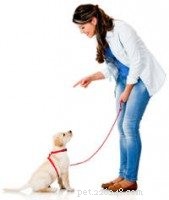 © Depositphotos.com / andresr
 Though not essential, it’s extremely useful to train your dog to eliminate on command.
When you’re in a hurry and need to leave in the morning, or it’s right before bed time, these are times you will wish your dog would eliminate on command rather than you having to patiently wait for them to do their job.
Most dogs love being outside and will use any excuse to get out there and stay there.
So it’s of benefit if you can clearly tell them you’re going outside to toilet only and for nothing else, that there’s no chance of exercise or play. If they don’t potty, they’re coming straight back in.
You do this by using a cue word and walking them on leash to their potty spot, not allowing them to do anything else and if they do not potty, taking them back inside and trying again in a few minutes.
Because a full bladder or bowel is uncomfortable, dogs are happy to relieve themselves, but some may try to hold it if they think they can get to stay outside and sniff around a while.
By not allowing this and associating it with a consistent command, it will only take a few short weeks for them to learn your chosen command means a bathroom break only and that if they don’t go, they’re coming straight back inside uncomfortably full.
If this is something you’d like to train, it’s important that you choose the words to use before you start the training and make sure everybody uses the same words consistently.
If people use different words, your dog will get confused.
So pick a command like ‘toilet time ‘ that you will only use when you’re taking them to the bathroom and you will not allow them to do anything else.
You’ll have a different word like ‘walkies ‘ for other more fun times outside and your dog will eventually learn the difference and set their expectations of their time outside accordingly.
Once outside you can use another command like ‘potty’ or ‘do your job’ to ask them to do their business.
For the first weeks you should wait for them to start doing their business and then use the word ‘potty’ to build an association. And praise them afterwards with ‘good potty’. This will slowly teach them the command.
Eventually your dog will learn ‘toilet time’ means a quick bathroom break only, and ‘potty’ is you asking them to go.
NOTE: For a very good guide on training to eliminate on command from the ‘Whole Dog Journal’, please click here.
A quick word of caution: Don’t use a word for your elimination command that gets used at other times. For instance, many people use the words ‘hurry up!’, but if you say this to your spouse when heading late out the door, this could get very messy if your dog hears and reacts.

When your puppy’s very young it’s easy enough for you to scoop them up and carry them to their bathroom spot. And this is fine for the first couple of weeks while they have no bladder control and will perform their business very quickly.
But once they start to learn some bladder control, if you take them to potty without them being on leash, as soon as they hit the outside there’s all the sights, sounds and smells that can take over their inquisitive minds.
They easily forget what they’ve gone outside for and will romp and play in your yard instead, before going back inside still full. And some dogs even learn to actively hold their bladder just so they can stay outside to explore for longer.
So it’s in your best interests to lead them on leash to their bathroom spot and keep them there until they complete the job in hand.
Before you can do this you need to first get your puppy used to wearing a collar and leash. To help with this I’ve written a detailed guide that you can read by clicking here:How To Get Your Puppy Used To A Collar And Leash
Start this process at 10 weeks, and always lead them on leash from the 11th or 12th week. You may regret it with lots of time waiting outside if you don’t!
Like everything in life, house training runs smoother if you have everything ready before you start, hopefully before you even bring your puppy home. Although it’s never too late of course!
To help make sure you’re ready, here’s a checklist to cross off and make sure you have everything prepared. Have you:
With all this ready and in place, you’re now ready to begin house training your puppy.
Dogs thrive when living to schedules and routine, doing best when they have set times for eating, going to toilet, exercise, training and play.
And when it comes to house training, you’re going to love schedules and routine too!
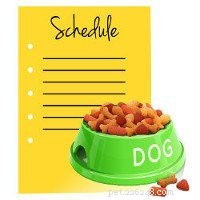
If you feed your puppy at random times throughout the day, they’ll need to defecate at random times throughout the day.
They won’t fall into any predictable schedule and your life will be that much harder.
But because the passage of food through their digestive system stays roughly the same, if you feed your puppy at the same times every day they will need to defecate at roughly the same times every day.
Furthermore, because puppy’s learn through repetition, by taking yours out to potty at the same times every day, their body learns to expect and follow this schedule, training your puppy to toilet at the times you’d like them to.
When you know the times your puppy needs to eliminate you can have them at the right spot at the right time with a far greater success rate than if you didn’t follow a routine.
This results in fewer mistakes, more opportunities to praise your puppy for going in the right place and so speeds up their learning.
Depending on their age a puppy will need to poop 3 to 6 times a day, and wee many more times than that. Can these times be predicted? Mostly they can.
When a puppy needs to potty depends on when they last ate, drank and their recent activities. Mostly they need to go:
But a puppy also needs to go many times per day regardless of recent activities, so you should also take your puppy to their bathroom spot on a consistent schedule such as the following:
This is only a guideline because all puppy’s are different. And on that note…
Not all puppies are the same. Some will need to wee within 2 minutes of drinking, others after 20 minutes. Some will need a bathroom break within 2 minutes of waking, others 15 minutes later.
This means there isn’t a ‘one-size-fits-all’ schedule I can give that’s suitable for every puppy and owner. You have to determine your puppies own natural tendencies and create a schedule to suit.
This may sound like a lot of work but it really isn’t once you get in to the routine. And besides:
Once you’ve determined your puppy’s natural rhythms, you can be at the bathroom spot at the correct times more accurately which is of huge benefit to both you and your puppy, so it’s highly worth doing!
But if you fear living to strict schedules is too hard to do…don’t fear! You don’t have to stick to them 100% of the time.
The more you can stick to schedules and routines, the smoother and faster the process will be. But you can stray from the path when necessary and still find success, it will just take a little longer.
Just don’t be overly strict and hard on yourself because we all have a life to live outside of house training!
So let’s go through the 5 steps of creating your puppy’s schedule.
 © Depositphotos.com / zzve
 Follow this 5-step process to create a schedule that works with your puppy’s natural rhythms and fits with your lifestyle and commitments.
Keeping and following a written schedule may seem odd or a bit excessive, I’m sure you’ve not seen many people bother with it?
But I promise you it’s not much work, after a couple of days practice it becomes a simple routine, the time it takes is negligible and the results are phenomenal.
Depending on how old they are, your puppy needs feeding between 2 and 4 times a day. Here’s a guide to how often and when you should feed them:
You should feed your puppy 4 times a day until 12 weeks old.
To achieve this you need to feed them every 4 hours and you should make it the same time every day, fitting it into a schedule that’s best for you.
A good routine would be to feed ‘breakfast’ when you first get up, at 7:30AM, then at 11:30AM, 3:30PM and 7:30PM.
You should feed your puppy 3 times a day when 12 to 26 weeks old.
The timings for 3 feeds a day would be roughly every 6 hours:7:30AM, 1:30PM and 7:30PM.
From 26 weeks old and onwards, feed your puppy just two times a day
For 2 meals a day you need to space them out 8 to 12 hours apart.
What works for me is shortly after I get up at 7:30 and when we have our evening meal between 6:15PM and 6:45PM.
Availability Of Water:
You should make sure fresh water is always available but because drinking too much or too little can be a sign of health problems, you do need to monitor their water intake.
© Depositphotos.com / Madrabothair Physical activity has a direct influence on a puppy’s potty schedule because it ‘helps things move along’ for want of a better expression.
Physical activity often leads to a puppy needing to potty very soon after. So to encourage predictable potty times for your puppy, you want to schedule their exercise and play.
This will help your puppy’s mind and body to slip into a routine that will help you both with the house training process.
Deciding when to exercise, train and play with your puppy is entirely up to you. You should fit it around your lifestyle and commitments, but try to make it the same times each day if you can.
If you’ve followed the guide so far, you’ve now gathered all the information you need to design your puppy’s house training schedule.
Enter all the following details into a single column in an excel spreadsheet, or write them down as a day schedule with a pen and paper:
After writing down this schedule, tick off each task as you go through the day with your puppy.
This way you will always know what needs to be done and when, and there will be no confusion about whether someone else in the house fed, exercised or took the puppy to the loo.
If it’s not crossed off the schedule, it hasn’t been done.
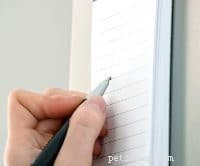 © Depositphotos.com / Gajus-Images
 Alongside the schedule you’ve designed, add some columns where you can take notes of your puppy’s bladder and bowel movements, as well as their daily activities.
You do this because it’s important information you can use to design an ever more accurate schedule going forward. (I discuss this further in step 5 below.)
The things you should write in your diary are:
Basically, note down anything food, activity, accident or potty related so you can look for patterns to help you in the next step.
Look over any ‘accidents’ your puppy had and you noted during the day.
You should be able to pick up on any patterns and adjust your own behavior to avoid mistakes in future.
Was puppy left alone and peed in the living room while you made breakfast? – You need to increase supervision or make doubly sure you crate them when you’re busy.
Puppy should never be left alone unsupervised, learn from this mistake.
Or maybe puppy peed in the crate after an hour? – You left them crated longer than they can hold their bladder, or didn’t empty them before crating.
Learn from this mistake.
Look over how long they took to potty after being taken for a scheduled potty break
Did you catch them ‘in the act’ 3 times in a single day? Well done for watching them closely enough.
However, if they tried to go 3 times in the home, you’ve learnt that you likely aren’t taking them to empty themselves often enough. So increase the frequency.
Or perhaps the opposite happened and you noted that 3 times in the day you took puppy for a scheduled bathroom break, they didn’t go and you returned them inside for 15 minutes before trying again?
This shows your puppy is maturing fast, doesn’t have to potty as often as you thought and can last longer between potty visits than you’re allowing.
Therefore you should stretch out the time between visits by 10 to 15 minutes for the following day.
Look over how long after eating they pooped
If you see puppy didn’t potty for 20, 15, 20 and 20 minutes after their meals of the day, with this information you learn it’s pointless to take them to their potty spot until 15 minutes after they finish eating.
Some puppy’s go 2 minutes after eating, some after half an hour. This is how you find out.
By writing out the schedule as in step 3, you should never forget to feed, train or take your puppy to potty. If it’s not marked off on the schedule, it’s not been done.
And by using the schedule as a diary as in step 5, you get feedback on how you and your puppy are performing, and are armed with the necessary info to make changes to your schedule over time.
This helps you to truly match your puppy’s natural rhythms and their maturing and changing body.
You, your puppy and their needs all stay in sync and house training becomes that much easier.
 © Depositphotos.com / ccaetano
 For ease of use, I recommend simply keeping a written diary with good old-fashioned pen and paper.
We’re all in the electronic age surrounded by smart phones and i-Pads, but this is simply too much hassle and will likely lead to you not bothering if you have to power up a device and so on to make an entry.
Just make a spreadsheet in excel and print it out, or simply buy some lined paper.
Keep it somewhere you can always see and know where it is, alongside a pen or pencil and write entries in it as you watch your puppy throughout the day.
Next to your house phone, pinned to the fridge or by the exit to your puppy’s bathroom spot is a good place to keep it, but put it wherever is best for you.
When you first get your puppy home at 8 weeks, they can barely control their bodily functions so keeping a diary isn’t perhaps that helpful but I still recommend you do so, to get yourself into the habit.
I would recommend keeping a diary every single day until you’ve determined a definite pattern and have spotted their individual ways. Up until they’re 14 weeks old is a good target.
After this, continuing with a diary every day is the best advice, although keeping one for 3 consecutive days each week will be sufficient for you to pick up on any changes as they mature.
Once your puppy is 5 to 6 months old, they will have sufficient bladder control and experience to make a schedule and diary unnecessary.
Just make sure they get access to the outside at least once every 3 hours and all will be fine.
I discussed earlier how a puppy will need regular visits to their bathroom spot, something like every 30 minutes at 8 weeks old, every 45 minutes at 10 weeks old and so on.
But every puppy is different and their progress in having longer time between needed toilet breaks will vary too.
Although your puppy’s natural progression reflects in your diary and your schedule will adjust to suit, you should purposely try to increase the time between breaks yourself if it doesn’t happen naturally.
If you don’t see a natural increase of time between eliminations, add 5 minutes to the scheduled times every 3 or 4 days to stretch out how long they can last.
If they can’t make the time, peg it back 5 minutes and try to increase the time again in a further 3 or 4 days.
You do this because as a puppy grows, the size of their bowel and bladder increases, so they will be able to hold more for longer and you want to take advantage of this.
This is also teaching them necessary bladder and bowel control.
Your aim is to have them needing a toilet break only every 4 hours or so by the time they’re 5 to 6 months old.
In an ideal world, when you take your puppy to potty they will empty themselves completely and instantly, with no delay and not holding any back to release as soon as they’re back in your home.
There are a few things you can do and some that you certainly shouldn’t that will help you to achieve this goal.
Use your cue word before you take them: By using your chosen cue word every time before you take them to potty, your puppy will learn what the trip is about and what they must do. This eventually leads to faster results as they know what is expected of them.
Lead your puppy to the bathroom spot on leash: This gives you the ability to keep your puppy at the bathroom spot and prevent them wandering off, getting distracted and forgetting what they are there for.
This isn’t always possible if you catch them in the act and must hurry, but for scheduled bathroom visits you should always aim to take them on leash.
Make sure you stay with them at their bathroom spot: If you have them on leash, then of course you will be. But if you don’t have them on leash, make sure you stay with them because the separation will just make your puppy anxious to get back with you and they will not potty.
Once at the bathroom spot, don’t say or do anything until they start to eliminate: Puppy’s get distracted very easily and any attention can take their mind off the job in hand. Be boring, uninteresting, and just hold your puppy’s leash until they start to go.
When they start to go, say your chosen cue word in a soft warm voice. Otherwise remain silently still until they’re finished: You need to associate your cue word with the act, but if you say it too loud and brightly, it may distract them and they won’t finish.
Similarly, any other movement or sounds like praising them too early or shuffling your feet might distract them and they might not finish what they’ve started.
If they don’t finish and completely empty themselves, they may finish inside your home and even if they don’t they will not be able to make it to the next scheduled bathroom break so an accident in the home is more likely.
When you’re sure they’ve finished, praise them like mad and reward them: You should heartily praise your puppy for going in the right place, then allow them a few minutes off leash, a couple of minutes play or a tiny (and I mean tiny!) but tasty food treat.
The praise and reward make going to potty a happy experience, tells them they’ve done right and helps them to learn more quickly.
Mix up the reward between play, time off leash and a food reward to keep them guessing, but keep the food rewards to a minimum as what goes in must come out and random feeding promotes random elimination times!
 © Depositphotos.com / c-foto
 First of all, make sure you’ve spent enough time out there.
Many people pop out, stand for 1 minute and then come back in. This isn’t enough as a puppy can only go when they need to go and they may not be ready.
Some people recommend to stay out there for 10, 15, 20 minutes, whatever it takes until they go, then praise profusely when they do. Although this advice may be sound, personally I’d rather not.
I recommend you give them 3 to 5 minutes, saying your cue word every 30 seconds or so but otherwise standing silently still just holding their leash so they cannot wander off.
If after 3 to 5 minutes they haven’t been to toilet, bring them back inside your home and then:
If using constant supervision: Set them down in your home and continue watching them to intervene in case they make moves to go in the wrong place. Take them back to their bathroom spot in 10 minutes or so.
If using a crate for house training: Pop them back in the crate and leave them for 10 minutes. Then take them back to their bathroom spot.
If using umbilical cord training: Take them back into your home and watch your puppy carefully while they’re tethered to you by leash. Take them to their bathroom spot after 10 minutes.
If paper training: If they are confined to the area that’s papered, do nothing. If not, take them away from their bathroom spot and watch them for 10 minutes before returning them to their bathroom spot.
In all cases, just remember you’ve brought them back in with a full bladder so you mustn’t take your eye off them if free in your home.
And if crate training, do not leave them in the crate too long else they may be forced to soil in there. Prevent this at all costs.
Rinse and repeat the visits to and fro like this until they do potty, then follow the next sections advice.
Between scheduled bathroom visits you should do two things:Allow some supervised free time in your home, and use your chosen house training method.
 © Depositphotos.com / ikostudio
 After returning from the bathroom spot you should grant your puppy some free time in the room where you spend most of your time, up until 20 to 25 minutes before their next scheduled bathroom visit.
By free time I mean time outside of their crate, or off leash, or out of their confinement area. Time free to roam, explore and live life.
When 10 weeks old they may need to toilet every 30 minutes, so they only get 5 to 10 minutes free time. When 12 weeks old, they may need to toilet every hour so they can get 35 to 40 minutes free time.
You allow this free time because you are of course working toward a time when they will always be free and trusted unsupervised.
To get there they need the experience, to get used to being free in your home and begin seeing it as a place they need to keep clean.
They also need social interaction and life experiences.
The best time to grant this free time is right after a bathroom visit so you’re fairly sure they’re empty and are far less likely to make a toilet mistake in your home.
The important thing to remember is:
When your puppy is free in your home in this way, you must know exactly where they are at all times and be watching them like a hawk, ready to intervene if they look like they’re about to potty where they shouldn’t.
But what are the signs a puppy is about to potty?
When supervising your puppy’s free time, the signs you need to look out for that they need to eliminate are:
The minute you see any of these signs you should take your puppy to their bathroom spot immediately. There may well be some false alarms, but better safe than sorry.
Most puppies will display one or more of these pre-elimination behaviors, but no two puppies are the same so you need to be observant and learn your own puppy’s pre-toilet rituals.
Carefully watch them and you should soon notice what body language means a wee or a poop is imminent. There will be recognizable signs.
 © Depositphotos.com / AOosthuizen
 Once your puppy has enjoyed some free time and it’s nearing 20 to 25 minutes before a scheduled potty visit, you need to switch to using your chosen house training method.
We do this because the time is fast approaching when mistakes are most likely to be made. So we might crate our puppy, or attach a leash for umbilical cord training if we’re using these techniques.
Remember, all free time is closely supervised anyway so you’re ready to react if they’re about to ‘make a mistake’, So..
If using constant supervision: Carry on as you are. Watch your puppy and be ready to react if they look like they’re about to potty. Then at their scheduled potty time, attach a leash and lead them to their bathroom spot.
If using a crate for house training: Encourage your puppy into their crate and close the door, leaving them there until their scheduled potty time and then release them, instantly attaching a leash and leading them to their bathroom spot.
If using umbilical cord training: Attach a leash and tether your puppy to you, ready to react if they make moves to eliminate. Take them to their bathroom spot at the scheduled time.
If paper training: Take your puppy to their confinement area where their papered bathroom spot is and supervise them, ready to intervene if they make moves to potty away from the paper. Encourage them to potty at their scheduled time if they don’t do so naturally.
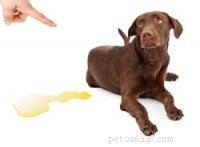
If you catch your puppy pottying in the wrong spot, you should simply clap your hands and say a firm ‘NO!’. You don’t want to shock and scare them, just loud enough to startle and get their attention.
It’s very important you DO NOT scare them as they may become afraid to potty in front of you. Not good when you need to be there to encourage them for doing it in the right place.
When you clap and say ‘NO!’, some puppies will stop what they’re doing, but others may not.
If they do, you can pick them up and carry them, or take them by the collar and gently lead them to their bathroom spot, then encourage them to finish where they should.
But if your puppy doesn’t stop mid-flow, my advice is to accept the fact you’re too late, you didn’t recognize the signs they needed to potty (or weren’t watching them closely enough) and you should let them finish and then clean it up.
Many people recommend to pick your puppy up and take them outside even if they don’t stop. But to me this seems foolish.
Instead of a little pile or puddle, you then have a long line of wee or poop from where you caught them all the way to the bathroom spot that you then have to deep clean instead. To me this isn’t worth the extra cleaning effort.
 © Depositphotos.com / adogslifephoto
 There is nothing you can do.
You’ve missed the opportunity to correct your puppy and anything you do now your puppy will be unable to connect to the act of pottying in the wrong place.
If you get angry, shout at or punish them in any way, they might ‘look guilty’ trying to appease you, but they will have no idea what it is that’s driven you mad. They’re just trying to calm the situation.
And what sometimes happens is a puppy learns that poo on the floor is what you’re mad about, causing them to slink away to poo where it’s hidden, or worse they may even eat it so you don’t see it and get mad.
So if you stumble on a mess you didn’t catch them make, simply move them away and deep clean the area.
Then think how they were able to make such a mistake and tweak your plans so it cannot happen again. But any corrections or punishment now will be futile.
This advice applies not just to full-time workers, but also if you must occasionally leave your puppy home alone for a few hours.
Most importantly, follow all the advice in this guide so far for the times that you are home.
Supervise them, correct any mistakes, set feeding and elimination schedules and everything else I have advised. Then, what follows are your choices of what you can do to cover when you aren’t at home.
First of all, if like me you use a crate, you simply cannot leave your puppy in the crate for many hours. They’ll be forced to potty in there after a very uncomfortable time trying to hold it for as long as they possibly can.
This is very unfair on your puppy and it will destroy the crates power as a house training tool if they lose the instinct to keep it clean.
Secondly, please do your best to enlist the help of a family member, friend, neighbor or hire a dog walker to periodically pop in to visit your puppy, take them to their bathroom spot, give them some social interaction and so on.
I understand this isn’t possible for all owners, but you should strive to achieve this if possible.
Having said that, what should you do about house training when you aren’t at home:
Throughout the many articles of this guide you will have read me advising against paper training unless you’re planning on a permanent indoor bathroom spot for your dog.
But I also freely admit to using paper training myself occasionally, for the unavoidable times I have to leave my puppy home alone for a few hours.
If you have to leave your puppy home alone for any reason, usually because you work, then paper training in your absence is the only thing you can do.
You then have two options available to you:Buy and use an exercise pen, or confine your puppy to a single, puppy-proofed room.
[amazon fields=”B003XU0B62″ value=”thumb” image_size=”large” tracking_id=”labradortraininghq-20″ image_class=”ais200fr”] An exercise pen is a confinement device that looks like a crate but is much larger and has no roof. They can have any number of panels, be square, hexagonal, octagonal, L-shaped…they’re very flexible (an example 8 sided pen is in the image to the right.)
You use it to confine your puppy so you know they’re safe, as is your home and belongings from their teeth.
They’re big enough for you to paper an area inside to use as a toilet, while leaving space where you can set up your dogs bed, a water bowl and some chew toys and so on away from where they have to potty.
Initially use less than half of the confinement area for your puppy’s bedding, toys and water bowl, then paper over the remaining floor space.
As they get used to pottying on paper, reduce the area covered one sheet at a time until just a small area remains covered.
Once you know your puppy can hold their bladder for longer than they have to be left alone, remove the paper altogether.
By 16 to 20 weeks, they should be able to last the 3 or 4 hours max they will be left alone and somebody comes to exercise them and allow a bathroom break.
NOTE: You should get your puppy used to an exercise pen by using the same techniques as crate training, so please refer to my guide to crate training puppies
[amazon fields=”B004RL1KPC” value=”thumb” image_size=”large” tracking_id=”labradortraininghq-20″ image_class=”ais200fl”] When I’ve had to leave a puppy alone, I confine them to a paper covered area of a puppy proofed room, with a puppy pad in a holder.
Between 8 and 12 weeks (when weeing seems spontaneous), my puppy spends a fair bit of time in there and I paper train them to use puppy pads.
Most recently, the room I used was basically our dining room, though it’s never used for that purpose and is essentially bare.
Our kitchen and dining room was separated by an arch where a door used to be, with tiled flooring, making it ideal.
I used a baby gate across the arch between the kitchen and dining room, and initially covered the dining area with paper, over time reducing it to just two sheets with the puppy pad holder on top.
The dining area is completely empty, with no furniture, nothing in there. So it’s as puppy proofed as can be. But a word of warning…
If you use this option and have any furniture or anything at all in the room, it’s likely it will be scratched and chewed! Skirting boards, the corners of furniture items, anything within reach is a potential target for teeth and claws.
My girlfriend works from home, we crate trained and we had no problem finding house sitters in an evening if we needed one, so we all but had things covered. But this is something you need to be mindful of.
So I recommend using an exercise pen if you’re going to leave your puppy alone often and there’s any chance of a room being damaged.
 © Depositphotos.com / feedough
 Regardless of the method of house training you choose, some form of confinement is almost always necessary, for the times when you really cannot watch your puppy.
And there will always be a time or two so it’s best to prepare in advance.
You may have an unexpected visitor or need to visit A&E in an emergency. Whatever the reason, there just WILL be times you cannot supervise your puppy.
If you’re using a crate, you have these times covered.
But if you’re against a crate for whatever reason and have chosen to exclusively use constant supervision or umbilical cord training, you will have to invest in an exercise pen or confine your puppy to a single room and use paper training.
The essence of house training is to prevent mistakes and praise your puppy heavily when they potty in the right place.
If you cannot watch your puppy, the chances of them making a mistake go through the roof.
So even if you choose to use a constant supervision method exclusively, you will still need to confine your puppy sometimes to a paper covered area just in case.
 © Depositphotos.com / domako
 You’ll likely find your 8 week old puppy has absolutely no bladder control. I mean literally none at all.
One minute they are trotting along, the next they are leaking. No warning signs for you, not even any warning signs for them. They just don’t know it’s going to happen themselves.
It’s not their fault, it’s just their immature bodies doing what they do.
During this time it’s foolish to allow them on your living room carpets for even a second.
I recommend setting up an exercise pen with the entire area papered, or do as I do and confine them to a room with the entire area papered.
Use this time to paper train them, to get them used to weeing on paper and gradually reduce the area because you will use this method if you ever have to leave them home alone during the next 4 or 5 months.
Some time between 8 and 12 weeks, your puppy will start to show some bladder control (usually 9 to 10 weeks) and will begin to show warning signs that they’re about to potty instead of instantaneously leaking. They will sniff, circle and so on as I mentioned before.
At this point you can now move on to using your chosen house training method.
I’m not saying when 8 weeks old you don’t house train them. Do! Start encouraging them to potty in the right place from the minute you get them home.
I’m just saying that it’s very hard when you have absolutely no warning for the first few days to a couple of weeks. Just don’t get mad at your puppy, it isn’t their fault and you should expect this.
A young puppy will not be able to last through the night without needing to potty. However, similar to humans a dog’s body slows down during the night and the need to toilet is severely reduced.
So the good news is, even at 8 weeks they will be able to last 4 or so hours and you will only need to wake once during the night.

Allow your puppy no food for 3 hours and no water for 2 hours before bed. Also, make sure to take them to their bathroom spot right before you go to bed so they can empty themselves.
Then set an alarm for 4 hours after their bed time when you must get up and take them to their bathroom spot. No excuses, you simply must do this.
If you find your puppy has soiled in this time, you should set the alarm for half an hour earlier the next night (3.5 hours). Repeat until you find you’re waking before they’ve had an accident.
After a few days of not having a night-time accident, set your alarm for 15 minutes later and increase the time by 15 minutes for each successful night they do not have an accident.
The time a puppy can last over night without needing to potty increases dramatically during their first few weeks so you’ll find this is OK to do.
If you find they make a mistake one night before you wake, set the alarm back half an hour, make sure they stay dry a few days and then increase 15 minutes nightly again.
Within a few short weeks you’ll find they can last a full 7 hours without needing a bathroom break.
And by using this schedule, you strike a good balance between a couple of inevitable accidents while stretching out the time at a good pace to lasting a full night.
It’s important that your puppy isn’t forced to eliminate in their crate as it can ruin their natural instinct to keep it clean, the very thing we take advantage of to help the house training process.
This is why I recommend if you find a mess you set the alarm for half an hour earlier, a reasonably big step back to where they’ve been successful at before.
If they soil their crate more than once in any given week, you may have to progress slower (add 15 minutes every 2 or 3 days), or perhaps sleep them in a papered exercise pen or their confinement room.
Maintaining their instinct to keep the crate clean is of utmost importance.
You should also consider consulting your vet to make sure it’s not a medical problem causing the mistakes.
When you take them out at night, say your chosen cue word, take them straight to their bathroom spot, praise them gently when they finish their business but do not reward them with anything else.
The last thing you want is to teach your puppy that during the night is a time for play or food treats!
This will come back to haunt you in a big way and result in noisy sleepless nights. You want your puppy to learn that night-time is for sleeping and for nothing else.
When the alarm goes off, collect them, take them to potty, praise with a simple, deadpan ‘Good potty! ‘ then silently take them back and return to sleep until the morning. Do nothing else.
No two puppies are the same. Some will be able to last the whole night without a potty break at 10 weeks (rarely), and some may not be able to at 15 weeks (also rarely).
But certainly by 16 weeks old your puppy will be able to last a 7 hour night without needing to potty if you do not feed them for 3 hours or provide water for 2 hours before bed time and allow them to empty themselves right before you lay down for the night.
 © Depositphotos.com / Nivens
 If you seem to be making little progress and your puppy is weeing and pooping randomly all the time, or just doesn’t seem to be developing bladder control, it could be due to medical reasons.
If you are feeding, exercising, training and playing with your puppy to a schedule, and when you look at your diary there seems to be no pattern to the times they need to potty, you should seek the advice of your vet.
Common ailments such as gastroenteritis, urinary tract infection and health issues affecting internal organs and the genitalia can lead to a dog needing to potty much more frequently, often leading to eliminating in the house.
Also, you should regularly check the firmness and consistency of their stools and if they’re too hard and dry, or soft and runny, there’s likely something wrong with their diet or a medical condition to blame. Again, seek the advice of your family vet.
You cannot successfully house train a puppy who is ill because their bodily functions will be too unpredictable. But of course if they’re ill, you want to have them back to good health anyway!
The simple answer is:‘When your puppy’s proven that they know to never soil inside your home.’
The average will be between 6 and 7 months old. The élite few may be some weeks earlier and yet others, particularly the smaller breeds, may take from 8 to 10 months. But 6 to 7 months is the ball park figure to aim for.
However, you have to be careful here and can’t judge it by a clock or calendar, you have to judge it by your puppy’s behavior and only stop when they have proven you can trust them.
A single mistake in the home can cause a major setback.
A puppy may not make a mistake for 2 weeks, then you give them too much freedom, they make a mistake and all of a sudden they are regularly trying to potty in the home again.
Also, some puppies just seem to forget everything for a few days now and then while growing up, even after being perfect for a couple of weeks.
Please remember this, expect it even, because it’s perfectly normal and you shouldn’t get worried or think your dog is being naughty. Just stick to your plan and they WILL eventually get it.
So anyway, it’s in your best interests to show caution and not be too hasty to end the house training process.
My advice would be to continue until they haven’t even attempted to make a mistake for at least 6 weeks so you can be sure they really have ‘got it ‘.
With house training, the fewer mistakes you allow your puppy to make and the more they are rewarded for doing the right thing, the quicker they will learn and the faster you will find success.
Because of this, the more effort you put in and the more time you spend with your puppy at the beginning – supervising to correct mistakes and taking them to their bathroom spot many times each day – the better.
But there are many other things you can do to help yourself and your puppy to find success. Setting up routines and schedules, controlling your puppy’s diet, understanding your puppy’s capabilities at different ages, working with their natural instincts and more besides.
This guide has provided you with all the theory, strategies, tips and tricks you will ever need to successfully house train your puppy as quickly and efficiently as possible, with the fewest mistakes along the way.
Put into practice what you’ve read within this guide and with a little patience and dedication you will be able to turn any puppy into a house training champion.
This was part 11 in a 12-part series where I’ve tried to provide all the guidance you could possibly ever need and covered everything I can think of for you to successfully house train your puppy or adult dog.
Пожалуйста, посмотрите всю серию по ссылке ниже:
This guide has taken me many weeks to put together so I’m hoping it will prove useful to people.
I would love to hear any feedback you have whether good or bad, so I can improve the guide over time and make sure it’s as useful as can be.
If you have any feedback, comments, questions or suggestions on how to house train a puppy, please add them to the comment section below and I will answer every one. Thank you :-)
For an entire website dedicated to House Training:www.TheHouseBreakingBible.com
For many example schedules for puppies of different ages, see:Housetraining from ‘The Academy’, Canada.
For a nice, detailed guide with some further tips and advice, see:How To Potty Train A Puppy, from ‘Fido Savvy’
Список всех принадлежностей, которые мы получаем для наших новых щенков служебных собак, можно найти в нашем контрольном списке для новых щенков в блоге PuppyInTraining.com.
Вещи, которые вам понадобятся Угощения Детские ворота Клетка для собаки Ферментный очиститель Предупреждение Приучение чихуахуа к горшку может быть разочаровывающим процессом, но вы должны сопротивляться желанию отшлепать, отругать или наказать собаку за несчастные случаи в доме. Кара
Собаки могут быть обучены выполнять множество задач для людей, имеющих проблемы со здоровьем, инвалидностью или в других ситуациях, которые требуют помощи, когда они находятся вне дома. Служебная собака, прошедшая обучение, может сопровождать вас в общественных местах предприятий штата Вашингтон, вк